
Extreme Heat: How Every Guardian Can Help Neighbours and Wildlife
Discover simple ways to protect vulnerable neighbours, birds, bees, and wildlife during extreme heat. Learn how small acts of kindness can save lives and strengthen your community
COMMUNITY
Keeper of the vision
7/10/20263 min read
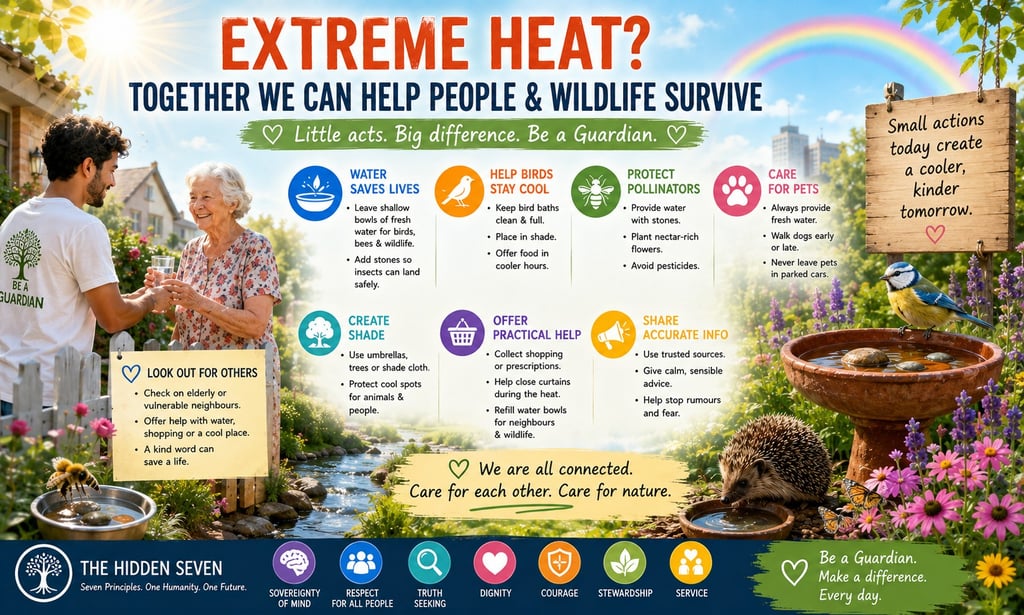
Extreme Heat: How Every Guardian Can Help a Vulnerable Neighbour and Local Wildlife
Small Acts Save Lives
Heatwaves are becoming more common, more intense, and lasting longer. While many of us can seek shade or cool our homes, not everyone has that option.
Older neighbours, people living alone, those with disabilities, young children, and countless wild animals can all struggle when temperatures remain dangerously high.
The good news is that helping doesn't require specialist knowledge or lots of money.
It simply requires noticing.
One of the core principles of The Hidden Seven is Service—choosing to leave the world better than you found it. During extreme heat, that principle can make a real difference.
Check on Someone Who May Be Struggling
A five-minute conversation could be the most important thing you do today.
Consider checking on:
Elderly neighbours who live alone.
People with mobility or health conditions.
New parents with young children.
Anyone you know who may be isolated.
Ask simple questions:
"Are you keeping cool?"
"Do you have enough drinking water?"
"Do you need anything from the shop?"
"Can I help with anything today?"
Sometimes the greatest gift isn't a solution—it's knowing someone cares.
Offer Practical Help
Small gestures can make a huge difference.
You could:
Deliver a bottle of cold water.
Collect shopping or prescriptions.
Help close curtains during the hottest part of the day.
Offer a lift to an air-conditioned public space if appropriate.
Help fill bird baths or water a neighbour's garden if they are unable.
Kindness often spreads. When one person helps another, others notice and are inspired to do the same.
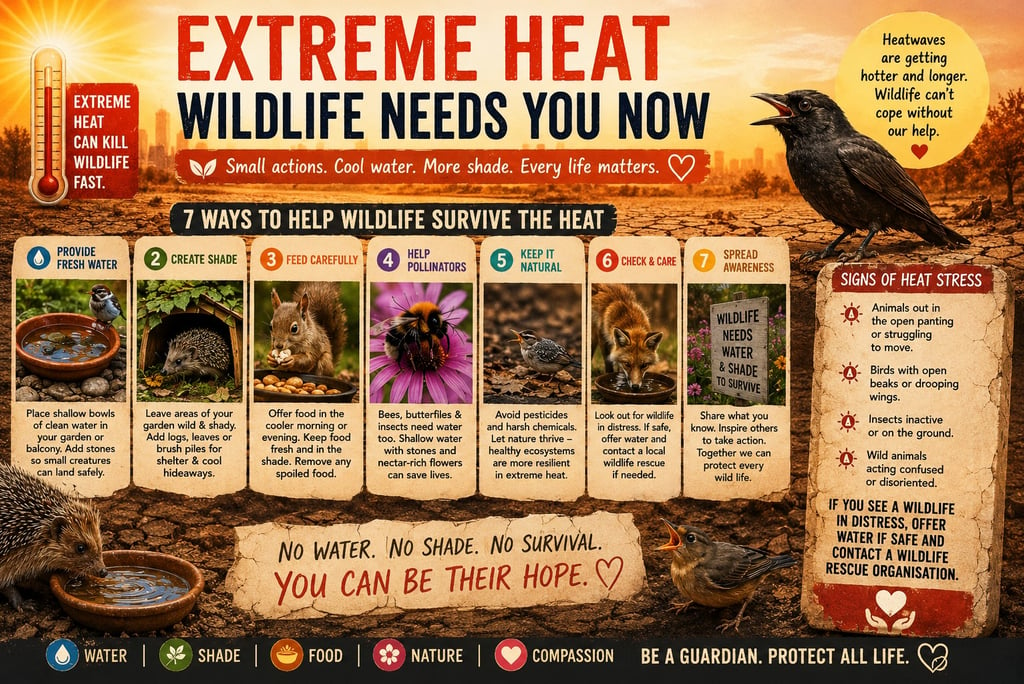
Leave Water for Wildlife
Animals cannot simply open a tap.
Place shallow bowls of fresh water in:
Gardens
Balconies
Community spaces (where appropriate)
Add a few small stones or pebbles so bees, butterflies, and other insects can land safely without drowning.
Refresh the water daily.
Help Birds Stay Alive
Birds lose moisture quickly during extreme heat.
You can help by:
Keeping bird baths clean and full.
Placing water somewhere shaded.
Providing food during cooler mornings or evenings.
Avoiding disturbing nesting birds.
A single bowl of clean water may support dozens of birds each day.
Protect Pollinators
Bees and butterflies work incredibly hard throughout summer.
Support them by:
Watering flowering plants early in the morning or late evening.
Leaving shallow water with stones for insects.
Avoiding unnecessary pesticide use.
Allowing some flowers to bloom naturally.
Healthy pollinators help entire ecosystems thrive.
Don't Forget Pets
If you own pets:
Always provide fresh water.
Walk dogs early in the morning or late in the evening.
Never leave animals in parked vehicles.
Check pavements with the back of your hand—if they're too hot for you, they're too hot for paws.
Create Shade Where You Can
Even temporary shade can save lives.
Think about:
Garden umbrellas.
Trees and hedges.
Cloth shelters for outdoor pets or wildlife.
Leaving cooler areas undisturbed for hedgehogs and other animals.
Nature is remarkably resilient when given a little help.
Share Accurate Information
During extreme weather, rumours and misinformation often spread online.
A Guardian seeks truth before sharing.
Use trusted information, encourage sensible precautions, and help others without causing unnecessary fear.
Calm, reliable advice protects communities.
The Guardian Challenge
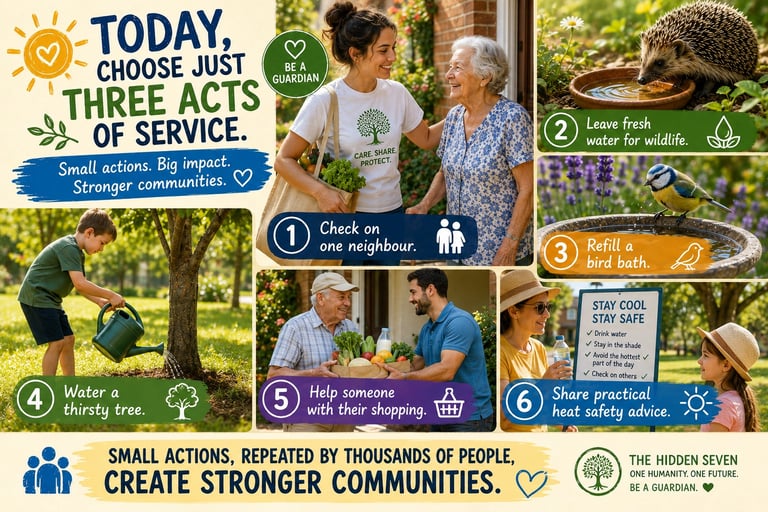
Today, choose just three acts of service.
Perhaps you will:
Check on one neighbour.
Leave fresh water for wildlife.
Refill a bird bath.
Water a thirsty tree.
Help someone with their shopping.
Share practical heat safety advice.
Small actions, repeated by thousands of people, create stronger communities.
That is how change begins.
Not through grand speeches.
But through ordinary people quietly choosing to care.
Reflection
Who around you—human or animal—could benefit from one small act of kindness today?
Because being a Guardian isn't about waiting for someone else to act.
It's about becoming the person who acts first.
Connect
Join our journey toward wisdom and freedom
Subscribe
© 2026. All rights reserved.
The Seven Core Principles framework is intended for personal development and informational purposes and should not be considered legal, medical, financial, or psychological advice.
Use of this website is entirely at your own risk.
About Founder
Contact
Accessibility Statement